Exploring the Vinyl Siding Replacement Cost: Factors, Breakdown, Tips, and ROI
Delving into the realm of vinyl siding replacement cost, this introductory passage sets the stage for a comprehensive discussion that blends insightful analysis with practical advice. From understanding the key factors influencing costs to exploring cost-saving strategies and the return on investment, this guide aims to equip homeowners with the knowledge needed to make informed decisions.
Factors Affecting Vinyl Siding Replacement Cost
When considering the cost of replacing vinyl siding, several factors come into play that can significantly influence the overall expense. It's essential to understand these factors to make informed decisions when planning for a vinyl siding replacement project.
Material Quality
The quality of the vinyl siding material chosen will have a direct impact on the overall cost. Higher quality materials will generally come at a higher price point, but they often offer better durability and aesthetic appeal. Lower quality materials may be more budget-friendly initially, but they could end up costing more in the long run due to the need for premature replacements or repairs.
Size of the Project
The size of the project, in terms of the area to be covered with new vinyl siding, will also affect the total cost. Larger projects will naturally require more materials and labor, leading to higher costs. Smaller projects, on the other hand, may be more cost-effective but could still incur significant expenses depending on the quality of materials chosen.
Labor Costs
Labor costs play a crucial role in determining the overall cost of vinyl siding replacement. The complexity of the installation process, the skill level of the workers, and the location of the project can all impact labor costs. It's essential to factor in labor expenses when budgeting for a vinyl siding replacement to avoid unexpected cost overruns.
Location
The location of the project can also influence the cost of vinyl siding replacement. Factors such as local building codes, permit requirements, accessibility to the site, and regional labor rates can all impact the overall cost. Projects in urban areas or regions with higher living costs may incur higher expenses compared to projects in rural or less expensive areas.
Type of Vinyl Siding and Additional Features
The type of vinyl siding chosen, as well as any additional features such as insulation, trim details, or decorative elements, can affect the overall cost of replacement. Different types of vinyl siding materials come at varying price points, and additional features can add to the total expense.
It's essential to consider these factors when selecting the right vinyl siding for your project.
Complexity of the Installation
The complexity of the installation process, including factors such as the architectural design of the property, the presence of obstacles or unique features, and the need for special equipment or techniques, can impact the cost of vinyl siding replacement. More complex installations may require additional labor and materials, leading to higher overall costs.
Average Cost Breakdown
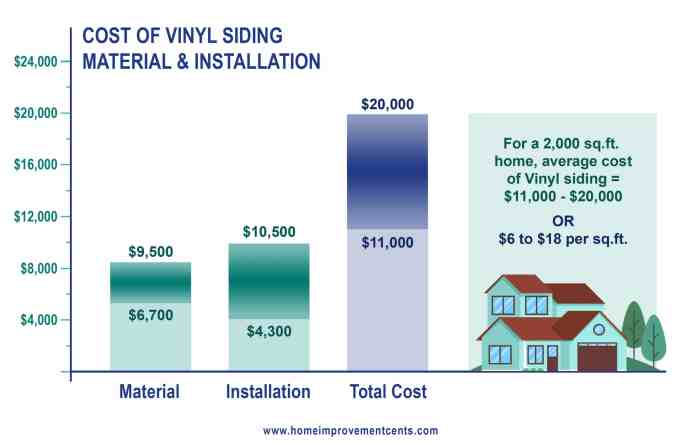
When it comes to vinyl siding replacement, understanding the average cost breakdown is crucial for homeowners planning this project. Let's break down the costs associated with vinyl siding replacement to give you a better idea of what to expect.
Materials
- Vinyl siding: The cost of vinyl siding can vary depending on the quality and brand, ranging from $2 to $7 per square foot. For a standard 1,500 square foot home, this can amount to $3,000 to $10,500.
- Additional materials: Other materials such as insulation, trim pieces, and accessories can add an extra $1,000 to $3,000 to the total cost.
Labor
- Labor expenses: Hiring professionals to install the vinyl siding can cost between $2 to $7 per square foot, totaling $3,000 to $10,500 for a 1,500 square foot home.
Permits
- Permit costs: Depending on your location, you may need permits for the siding replacement project. Permit fees can range from $100 to $500.
Total Replacement Cost
Total Cost = Materials Cost + Labor Cost + Permit Cost
Total Cost = ($3,000
- $10,500) + ($3,000
- $10,500) + ($100
- $500)
By taking into account all these factors, you can estimate the average cost breakdown for a vinyl siding replacement project and plan your budget accordingly.
Cost-Saving Tips and Strategies
When it comes to replacing vinyl siding, there are several cost-saving tips and strategies that homeowners can utilize to keep the overall expenses down. By exploring DIY options, negotiating with contractors, timing the project strategically, and considering alternative materials, homeowners can achieve a more budget-friendly vinyl siding replacement.
Consider DIY Options
One way to save on vinyl siding replacement costs is by opting for a do-it-yourself approach. Homeowners with basic carpentry skills can tackle the installation themselves, eliminating labor costs. However, it is essential to ensure that the installation is done correctly to avoid additional expenses in the future.
Negotiate with Contractors
When hiring contractors for the vinyl siding replacement project, homeowners can negotiate the pricing to get a better deal. Obtaining multiple quotes and comparing them can help in negotiating a reasonable price. Additionally, discussing the scope of work and materials with the contractor can sometimes lead to cost savings.
Time the Project for Off-Season Discounts
Timing the vinyl siding replacement project during the off-season can result in discounts and savings. Contractors are often looking to fill their schedules during slower months, making it a good time to negotiate lower prices. Planning the project ahead of time and scheduling it during the off-peak season can lead to cost savings.
Consider Cost-Effective Alternatives
Exploring cost-effective alternatives and budget-friendly materials can also help in reducing vinyl siding replacement costs. While vinyl siding is a popular choice, there are other durable and affordable options available, such as fiber cement siding or engineered wood siding. These alternatives provide a similar aesthetic appeal while being easier on the budget.
Return on Investment (ROI) of Vinyl Siding Replacement
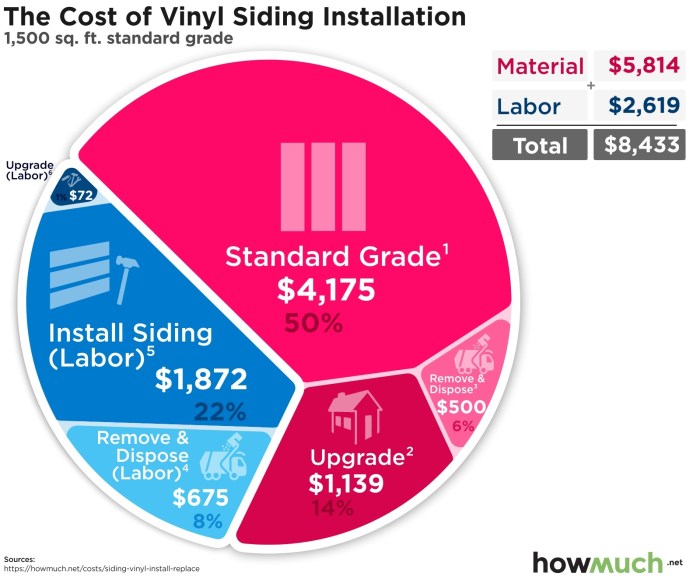
Investing in vinyl siding replacement for residential properties can yield a significant return on investment over time. While the upfront cost may seem substantial, the long-term benefits often outweigh the initial expense. These benefits include energy savings, increased property value, and reduced maintenance costs.
Potential Energy Savings
Installing vinyl siding can improve the insulation of a home, leading to reduced energy consumption for heating and cooling. This can result in lower utility bills and long-term savings for homeowners.
Increase in Property Value
Upgrading to vinyl siding can enhance the curb appeal of a property, making it more attractive to potential buyers. This can translate into a higher resale value for the home, providing a substantial return on the initial investment.
Case Study: Impact on Home Resale Value
A recent study found that replacing old siding with vinyl can yield an average return on investment of over 70% when selling a home. For example, a property with vinyl siding that costs $10,000 to install could increase in value by $7,000 or more, resulting in a significant profit for the homeowner.
Concluding Remarks
In conclusion, the journey through the intricacies of vinyl siding replacement cost unveils a landscape where informed choices pave the way for enhanced property value and long-term savings. By leveraging the insights shared in this guide, homeowners can navigate the realm of siding replacement with confidence and clarity.
User Queries
What are the primary factors influencing vinyl siding replacement cost?
The main factors include material quality, project size, labor costs, and location.
How can homeowners reduce the overall cost of vinyl siding replacement?
Homeowners can consider DIY options, negotiate with contractors, time the project for discounts, and explore cost-effective materials.
What is the return on investment of investing in vinyl siding replacement?
Vinyl siding replacement can lead to energy savings, increased property value, and maintenance savings, offering a favorable ROI over time.